French computer and game magazines in the 80s and 90s
I have been reading old computer magazines lately, lots of them have been scanned and uploaded to the internet archive.
The oldest computer magazine I know is BYTE from the US, they started publishing in the 70s:
Each issue had DIY electronic projects and it was a computer and electronic magazine. There are interesting articles about C, Unix and IBM PCs, early computer graphics, terminals and more. I learned about Multibus, Multibus was a board with connectors like motherboards but without a chipset. The first SUN and SGI workstations were Multibus.
In France, Tilt started in 1983. This magazine is about pinball machine, arcade machine, consumer computers, games and utilities.
Tilt reviewed the 80s home computers in issue 8 and 17:
Often Tilt had game listing for various home computer that people could type, in Tilt issue 11, there is the listing in basic of a game for Oric 1.
The listings were in basic with some data in hexadecimal for sprites and machine code.
In Tilt, there were ads for Amstrad CPC software until 1992, the CPC was very popular. Thomson had lots of ads but there was not a lot of software for their machines and they didn't evolve the hardware. Thomson gave up producing computers in 1989.
Then there is Joystick magazine, mostly about games on Atari ST, Amiga 500 and game consoles.
Generation 4 was also a magazine about games on Atari ST, Amiga 500 and game consoles.
Issue 14 of Generation 4 had lots of great games:
Shinobi, Rick Dangerous, Beach Volley, Stunt car racing, Indiana Jones, Falcon, Batman, Strider, Shufflepuck Cafe
The ads for joysticks in these magazines are great, today joysticks have totally been replaced with pads.
Tilt, Joystick and Generation 4 didn't write articles about Doom when it was released, probably because it was a shareware and id software was not an established game publisher.
In the 90s, I was buying Pixel magazine which was about 3D imaging and workstations. I found only 3 issues in the internet archive (my copies are in the trash, I cant scan them).
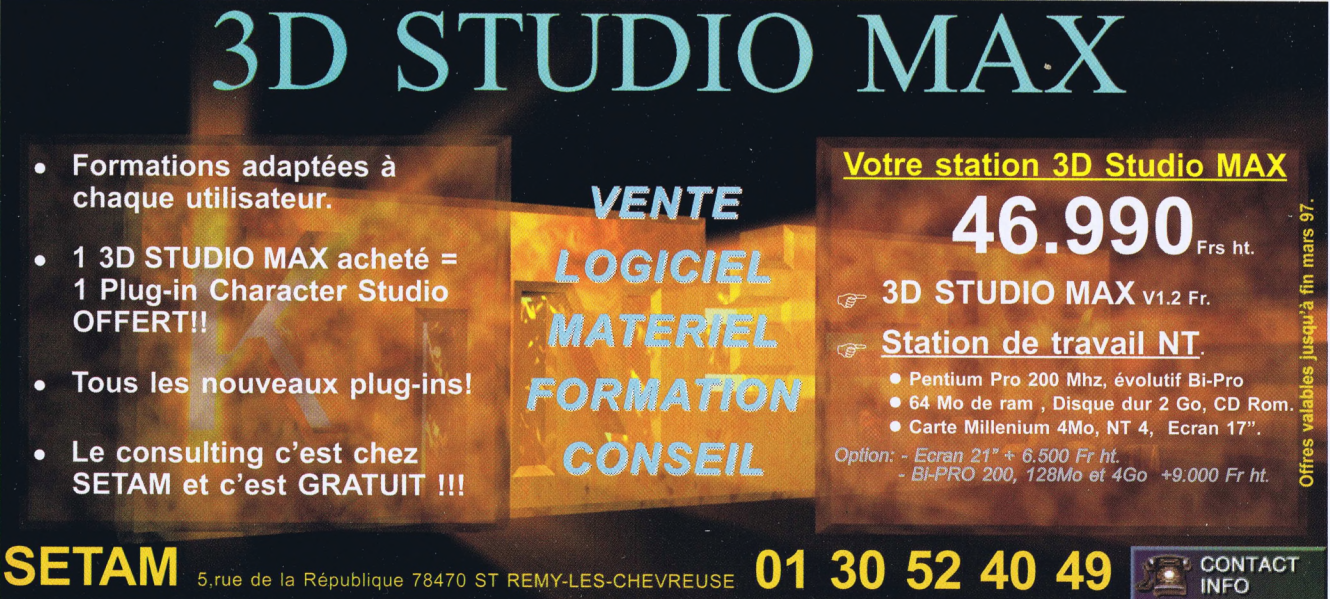
3D Studio Max was sold 47000FF(about 10000 euros) with a windows NT workstation.
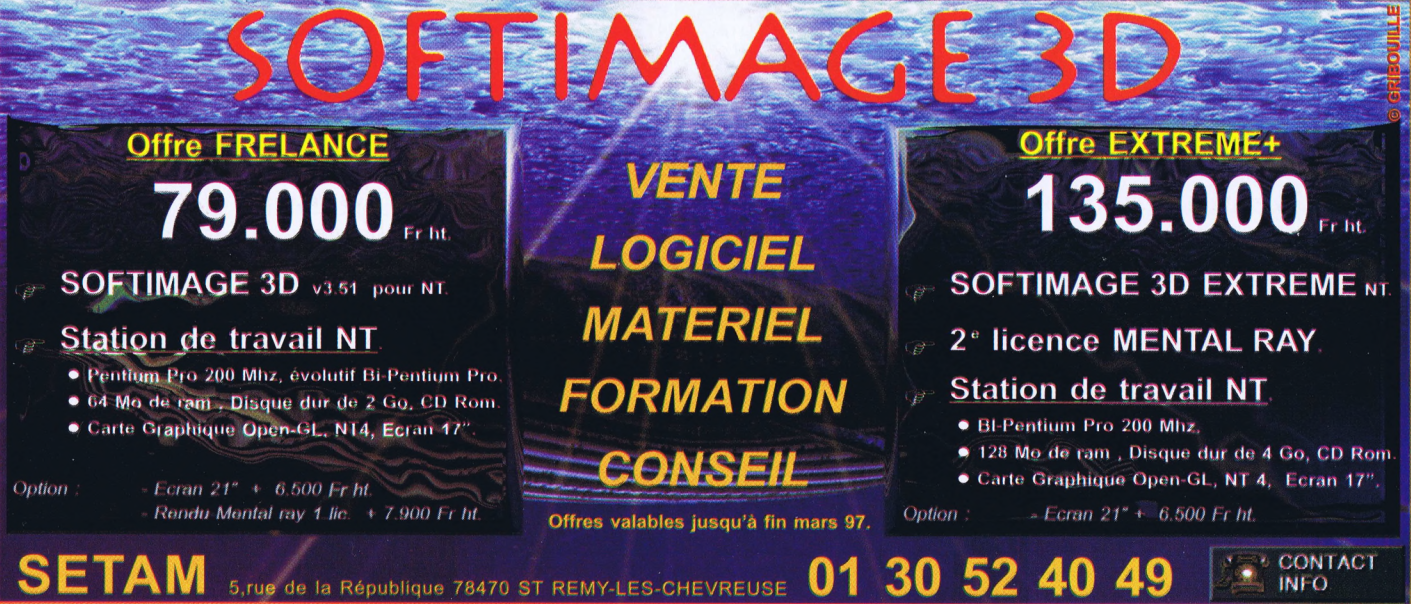
You could buy Softimage 3D for 135000FF with a windows NT workstation (about 30000 euros).
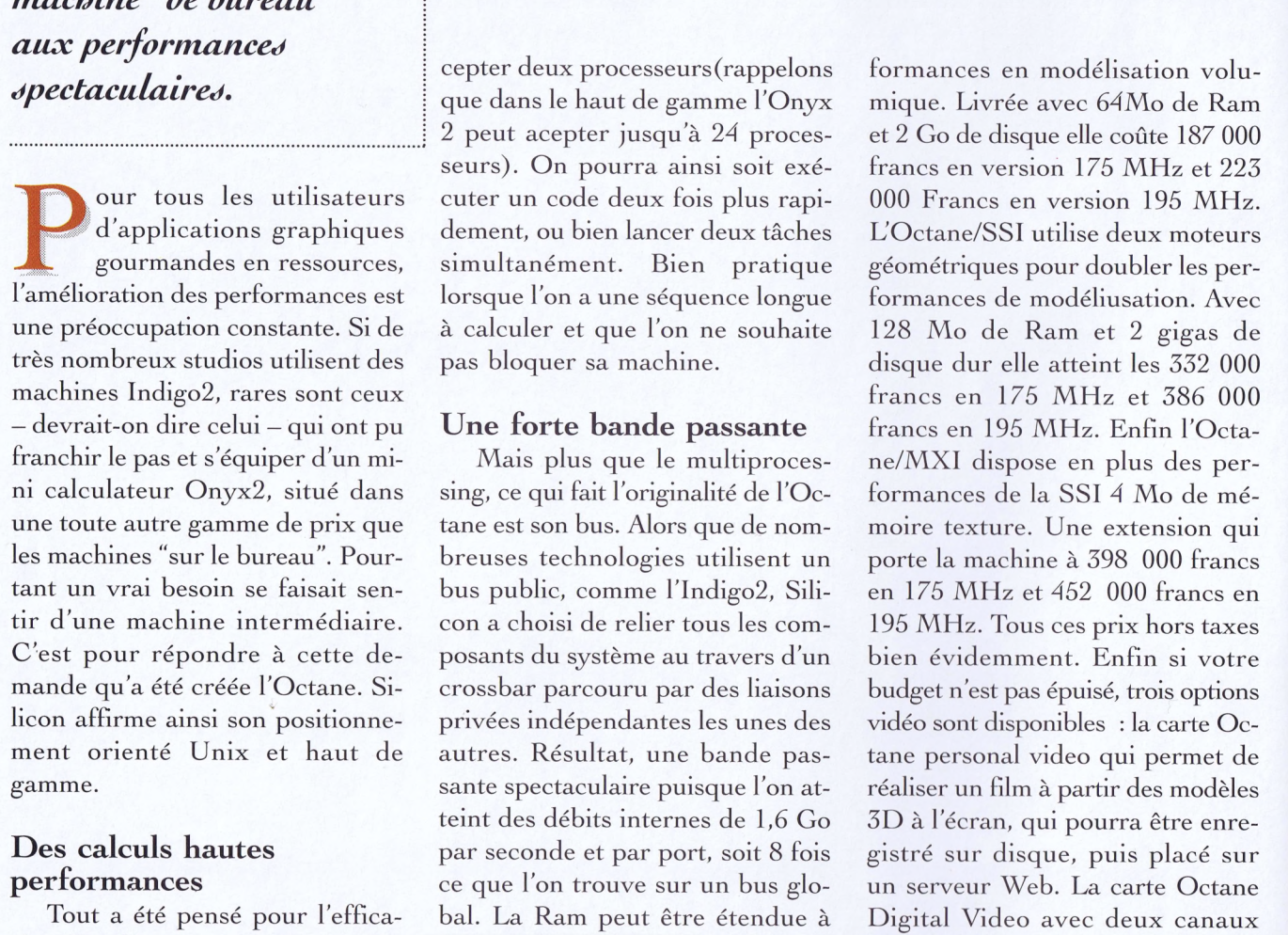
SGI Octane (195Mhz) was selling for 452000FF(about 100000 euros) in 1997.
Hopefully today we have blender and it is free (I think Pixar Renderman is also free under some conditions!).
Science et Vie Micro was about business software and business computers (PC).
SVM 104 has an article about the Intel Pentium CPU, this CPU was significant increase in performance compare to the 486.
The Pentium and Pentium Pro were threatning the low end sgi workstations.
It is fun to see the launch of exotic hardware in these magazines:
- the first CDROM drives were sold in 87 for Atari ST and Amiga, it flopped.
- Atari launched the ATW 800 with a transputer CPU, it flooped.
I bought a PC 286 12.5Mhz in december 1990 because it had superior graphics (640x480 256 colors) and the sound blaster audiocard came out in september 1990 and I thought it was the future. It was also an excellent typewriter with a printer.
Related: